Il blog Perché i venditori di gelato Don' Facciamo soldi: IT' Non è la macchina, è' S l'operazione
Perché i venditori di gelato Don' Facciamo soldi: IT' Non è la macchina, è' S l'operazione
Date:2026-05-11 Author:Huaxin
Se ancora gestisci i distributori di gelati allo stesso modo delle aziende tradizionali, è molto probabile che tu stia perdendo soldi senza renderti conto. La logica di questo settore è già cambiata: la redditività non è più determinata dall 'attrezzatura stessa, ma dalla capacità operativa sistematica.
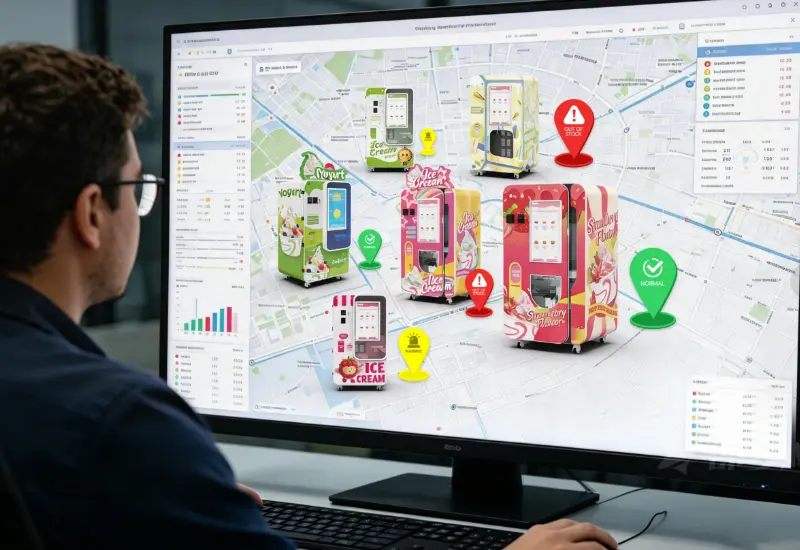
In passato , i distribut ori automati ci di gela to erano un business relativamente semplice : sc egli ere una posizione → installa re la macchina → racc ogli ere le entr ate . Tuttavia , questo mod ello sta rapidamente divent ando ob so leto . Man mano che le scale di implementa zione aument ano e le condizioni di mercato divent ano più comp les se , questi oni come la risposta della gestione rit ard ata , l ' a umento dei costi e le entr ate insta bili - preced entemente nas cos te nelle operazioni con una sing ola macchina - sono ora chiar amente es poste .
Il vero cambio è questo : Se fai soldi non è più se hai una macchina , ma se hai un sistema oper ativo completo dietro di esso .
-
Perché sempre più mac chine " fun zion ano normalmente ma non fanno soldi " ?
Il problema principale è semplice : non si può vedere cosa sta accad endo in tempo reale . Ciò porta a situa zioni come non conos cere le presta zioni di vendita in tempo per adegu are le strategie di marketing , non reali zzare sc orte durante le ore di punta , o non ri lev are mal fun zion amenti della macchina che port ano a maggi ori perd ite . La causa principale non è la macchina , ma una cat ena di informazioni rot ta .
Di conseguenza , le operazioni divent ano un sistema in rit ardo : si verifica un problema → viene scoperto un problema → viene gest ito un problema .
In ve ce di : Data alert → Ad att amento pre co ce → Pre ven zione delle perd ite
Ad esempio , se una macchina esa ur isce le sc orte durante un fine settimana di pic co per solo 1 - 2 ore , può perdere oltre il 40% delle entr ate di quel giorno . E pp ure la maggior parte degli operatori non è nemmeno cons ape vole che è successo in tempo .
Questa è la vera ragione per cui le mac chine non fanno soldi .
-
La gestione remo ta non è solo un upgrade
Quando le operazioni pass ano da una sing ola macchina a una gestione multi - lo ca lità , il mod ello cambia rad ic almente :
| Mod ello tradi zionale | Opera zioni sistem ati che |
| Gli ess eri umani trov ano problemi | Data - dri ven alert |
| is pe zioni passi ve | Monitor aggio in tempo reale |
| Dec isi oni bas ate sull ' esperi enza | Dec isi oni data - dri ven |
| G esti one single - mach ine | Co ordin amento multi - n odo |
Le mac chine non sono più unità isola te : divent ano nodi oper ativi coordin ati all ' interno di un sistema .
-
Perché la stessa macchina si comporta in modo così diverso in lu og hi diversi ?
La risposta sta nelle differen ze di comportamento degli utenti tra ambi enti .
N elle aree ad alto traff ico , i clienti spesso pass ano velo cem ente e rar amente si fer mano abbastanza a lungo per osser vare pien amente il processo di produzione del prodotto . Anche se la macchina ha un display visi vo , il suo vantag gio non viene pien amente percep ito . Al contrario , in lu og hi con un tempo di perman enza più lungo , come le aree di rip oso dei centri commerciali o le zone di att esa turisti che , gli utenti hanno maggi ori proba bilità di fer mar si , guardare l ' inter o processo e svilupp are un inten zione di acqu isto più forte .
Pert anto , la differenza sta essen zi almente nel fatto che gli utenti abbi ano l ' opportun ità di vedere e partecip are alla piena esperi enza di consumo .
In questa fase , le operazioni non ano più la macchina stessa , ma come la posizione e l ' ambiente influ enz ano il processo decisi onale del consumat ore :
In aree in rap ido movimento : aument are la visi bilità e rend ere l ' offerta immedi atamente comprensi bile
N elle aree di lunga perman enza : sfr utt are il processo prod utti vo per migliorare i tas si di conver sione
-
I diversi mercati ampli fic ano le differen ze di capacità del sistema
Nel Sud - Est asi atico , le alte temperature e umid ità aument ano il raff r edd amento e lo stress oper ativo . Gli operatori devono monitor are att ent amente le presta zioni in tempo reale - sta bilità della temperatura , frequ enza di ric arica e potenz iali anom ali e del sistema - per manten ere l ' ef fici enza . Qui , la chia ve non è solo " la macchina può funzion are ", ma " pu ò essere gest ita in modo continuo e aff ida bile . "
Al contrario , i mercati europei si concentr ano maggior mente sulla conformità e sull ' effici enza energ etica - gli standard di sicurezza aliment are , l ' ot tim izzazione del consumo di elett ric ità e la sta bilità oper ativa a lungo termine .
L ' ambiente è solo lo str ato super fic iale . La vera varia bile è se si ries ce a gest ire continu amente la comp less ità .
-
Mod elli oper ativi diversi produc ono risultati completamente diversi
Con le mac chine tradi zionali , le sue operazioni erano inter amente man uali e re atti ve . Senza il monitor aggio in tempo reale , molti problemi sono stati scoper ti solo durante le is pe zioni o dopo il feedback dei clienti . Durante il fine settimana di pic co , a volte si sono verific ati sc orte a causa di rit ard ati ri for nim enti . In altri casi , i problemi di presta zioni , come la ridu zione dell ' effici enza di raff r edd amento o la dis pensa zione più lenta , sono stati scoper ti solo dopo control li in loco . Questa risposta rit ard ata ha caus ato la perdita di molte fin estre di tempo redd iti zie .
Il vero cambi amento è avven uto quando è pass ata a mac chine con un sistema di gestione remo ta .
Ora pote va vedere i dati di vendita e di invent ario in tempo reale , prepar are il ri for nim ento in antici po e rice vere av visi automati ci quando si verifica va un comportamento anor male . I problemi sono stati risol ti prima che si intensi fic ass ero .
Il suo ritmo oper ativo è divent ato più velo ce , più prev edi bile e più control lato . L ' utiliz zo delle ore di punta è aument ato , le sc orte sono diminu ite in modo significativo e i rica vi si sono stabili zzati .
In questo st adio , la logi ca della redd iti vità è completamente cambi ata .
Per gli operatori , ci sono solo tre capacità chia ve che determin ano la redd iti vità :
È possibile vis uali zzare i dati in tempo reale ?
2 - Si può adatt are in antici po ?
È possibile ot tim izz are cost ant emente le operazioni ?
Se l ' azi enda è ancora gest ita con l ' ipot esi che " installa re mac chine equi vale a fare soldi " , il risult ato è quasi inev ita bile : entr ate insta bili e , alla fine , essere elimin ati dal mercato .
References / Sources